
Walking by faith as a deliberate way of life means choosing daily trust in God’s truth over visible circumstances, relying on Christ alone, and growing steadily through obedient dependence on Him. This is a topical sermon from 2 Corinthians 5:7

Key Takeaways – Sermon From 2 Corinthians 5:7
- Walking by faith means daily trust, not occasional belief. Faith guides everyday decisions, attitudes, and obedience, not just salvation or crisis moments.
- Faith has a clear object: Jesus Christ. Believers trust Christ alone for justification and peace with God, resting in His finished work.
- Faith stands firmly in God’s grace. Grace provides confident access to God and removes the pressure to earn acceptance.
- Faith engages the mind as well as the heart. Walking by faith includes thinking biblically and loving God with informed understanding.
- Faith continues throughout the Christian life. The righteous live by faith from beginning to end, growing steadily through obedience and trust.
- Faith becomes a deliberate way of life. Believers choose to rely on God’s truth over sight, shaping consistent spiritual growth and confidence.
Walking by Faith as a Deliberate Way of Life
Walking by faith often sounds inspiring until real life interrupts our plans. Many believers trust God for eternity yet struggle to trust Him with today’s decisions, pressures, and uncertainties. We prefer clear outcomes, visible results, and firm control. When God asks us to walk instead of wait for sight, hesitation usually follows. That tension reveals how easily faith becomes theoretical rather than practical.
Scripture reminds us that faith shapes daily life, not just salvation moments. In 2 Corinthians 5:7, Paul explains that believers walk by faith, not by sight. This message explores what that walk looks like in real terms. Faith must remain clear in its object, thoughtful in its understanding, and steady over time. These truths matter because daily life constantly tests what we truly trust.
As we move into this passage, listen with your own walk in mind. Consider how faith directs your thinking, decisions, and responses to God. This study will help you see faith not as a feeling but as a deliberate way of life. God invites believers to trust Him step by step, even when the path ahead remains unseen.
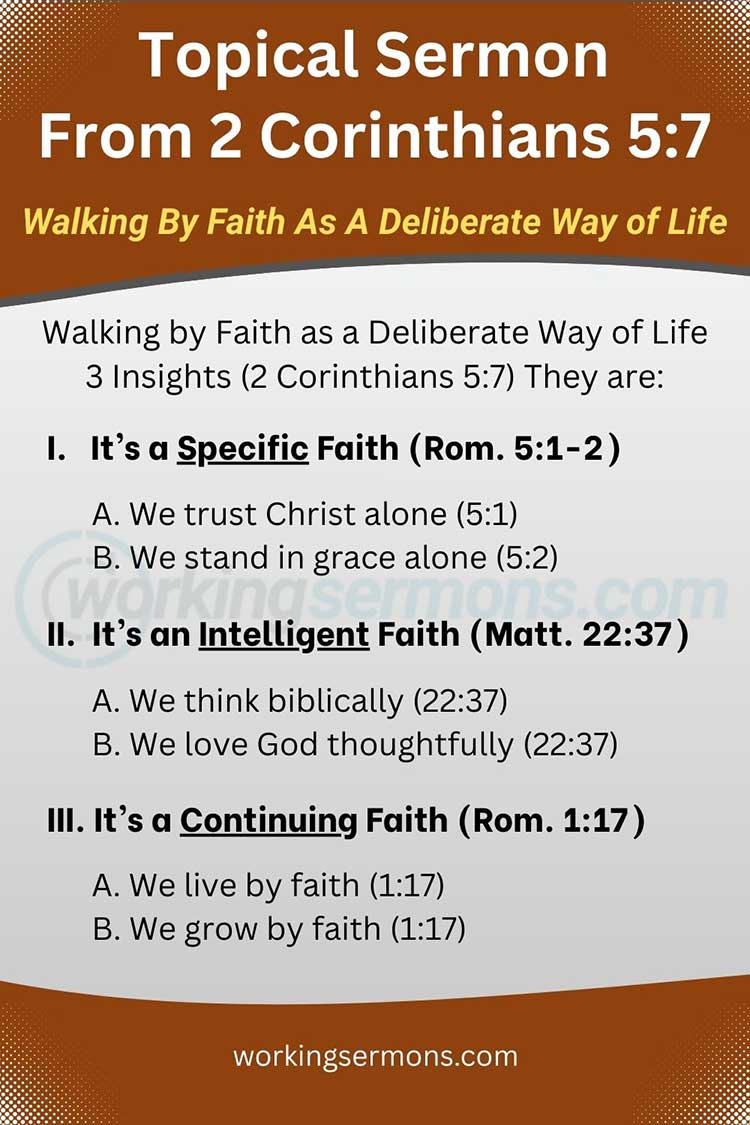
1. It’s a Specific Faith (Romans 5:1–2)
Walking by faith begins with a clear and definite trust in what God has accomplished for us through Jesus Christ.
A. We Trust Christ Alone (5:1)
Faith in Christ centers on justification, which means God declares the sinner righteous through belief in Jesus alone. Paul writes that we have peace with God through our Lord Jesus Christ, not through works or religious effort. This peace describes a settled relationship, not a passing feeling, because Christ removed the barrier of sin by His sacrifice.
Believers grow in confidence when they remember that faith has an object, not a mood. We trust a living Savior who finished the work of redemption at the cross. When doubts arise, we return to Christ Himself, not our performance. Trusting Christ alone anchors faith in truth rather than self.
B. We Stand in Grace Alone (5:2)
Grace describes God’s unearned favor given freely to those who believe in Christ. Paul explains that believers now have access into this grace, which means we live on new ground. We no longer approach God as strangers or servants earning approval, but as accepted children standing firmly in His favor.
Walking by faith means remaining in that position of grace every day. We resist the urge to measure our standing by feelings, success, or failure. Grace teaches us to depend on God’s strength, not our consistency. As believers stand in grace, faith grows steady, humble, and confident in the Lord’s ongoing work.
This material provides some ideas and thoughts for a topical sermon from 2 Corinthians 5:7 (Walking by Faith as a Deliberate Way of Life)
2. It’s an Intelligent Faith (Matthew 22:37)
Walking by faith involves the renewed mind, calling believers to engage God’s truth thoughtfully rather than follow Him by emotion alone.
A. We Think Biblically (22:37)
Jesus taught that loving God includes the mind, which shows that faith requires understanding and discernment. Biblical faith listens carefully to God’s Word and allows Scripture to shape beliefs, values, and decisions. When believers think biblically, they measure ideas by truth rather than culture, feelings, or personal preference.
Thinking biblically also protects believers from confusion and error. Scripture trains the mind to recognize God’s will and promises. As believers read, study, and meditate on God’s Word, faith grows clearer and steadier. A disciplined mind strengthens trust because it rests on what God has revealed.
B. We Love God Thoughtfully (22:37)
Loving God thoughtfully means responding to Him with informed devotion, not blind enthusiasm. Jesus connected love and understanding, showing that faith deepens as knowledge of God increases. When believers learn who God is, they respond with reverence, obedience, and confidence rooted in truth.
Thoughtful love guards faith from becoming shallow or inconsistent. Believers grow stronger when they reflect on God’s character, promises, and purposes. This kind of love leads to steady obedience, even during difficulty. As the mind embraces truth, the heart follows with genuine trust in the Lord.

The Wiersbe Bible Commentary by Warren W. Wiersbe
3. It’s a Continuing Faith (Romans 1:17)
Walking by faith describes an ongoing pattern of life where believers depend on God consistently, not occasionally or selectively.
A. We Live by Faith (1:17)
Paul teaches that the righteous live by faith, which shows faith governs everyday Christian living. Faith does not stop at salvation but continues into daily decisions, responses, and attitudes. Believers rely on God’s promises when circumstances feel uncertain and outcomes remain unclear.
Living by faith means trusting God in ordinary moments, not only during major trials. We choose obedience even when we cannot see results. Faith directs how we handle pressure, temptation, and waiting. As believers practice daily trust, faith becomes a steady habit rather than a last resort.
B. We Grow by Faith (1:17)
Faith also fuels spiritual growth as believers learn to rely on God over time. Paul describes faith as moving from beginning to end, showing progress and maturity. Growth happens as believers respond to God’s Word with obedience and patience.
God uses seasons of challenge to strengthen faith and deepen dependence on Him. Believers grow when they trust God’s purposes, even without full understanding. Each step of obedience builds spiritual strength. As faith matures, confidence in the Lord increases, producing endurance, humility, and lasting hope.
Conclusion
Walking by faith describes a deliberate, daily way of living that rests on God’s truth rather than visible outcomes. Paul teaches in 2 Corinthians 5:7 that believers move forward by trusting what God has revealed. Faith centers on Christ, engages the mind, and continues throughout the Christian life. This walk reflects confidence in God’s character, promises, and purposes, even when circumstances feel uncertain.
This message matters because believers often limit faith to salvation or crisis moments. God calls us to trust Him in ordinary choices, patient waiting, and steady obedience. Walking by faith shapes how we think, love God, and respond to challenges. As faith grows clearer and stronger, believers experience stability, spiritual growth, and deeper dependence on the Lord.
God now invites each believer to examine how they walk. Choose to trust Christ intentionally, think biblically, and rely on God day by day. Step forward in obedience, even when sight feels limited. As you practice this deliberate walk of faith, you will grow in confidence, maturity, and joy in the Lord.
Closing Prayer
Heavenly Father, we thank You for calling us to walk by faith and not by sight. Help us trust Christ alone, stand firmly in Your grace, and rely on Your truth each day.
Strengthen our minds to think biblically and our hearts to obey willingly. Teach us to depend on You in every season, even when the path feels unclear. May our daily walk honor You and reflect confident trust in Your promises. In Jesus’ name, Amen.
Frequently Asked Questions (FAQ)
Q: What does it mean to walk by faith and not by sight?
A: Walking by faith means trusting God’s truth and promises rather than relying on visible circumstances or emotions. Believers choose obedience based on Scripture, even when outcomes remain unclear, confident that God directs their steps according to His will.
Q: How do Christians walk by faith in everyday life?
A: Christians walk by faith through daily dependence on God in decisions, relationships, and challenges. This includes prayer, obedience to Scripture, trusting Christ’s finished work, and relying on God’s grace rather than personal strength or understanding.
Q: Is walking by faith the same as blind faith?
A: Walking by faith does not mean blind faith. Biblical faith rests on God’s revealed Word and character. It engages the mind, understands truth, and responds thoughtfully, trusting what God has promised rather than acting without knowledge or discernment.
Q: Why is faith described as ongoing or continuous?
A: Faith continues because the Christian life requires constant dependence on God. Scripture teaches that believers live by faith from beginning to end. Faith grows through obedience, endurance, and trust across every season of life, not just at conversion.
Q: How does walking by faith help spiritual growth?
A: Walking by faith strengthens spiritual growth by teaching believers to rely on God consistently. As trust deepens through obedience and trials, believers mature in confidence, humility, and perseverance, developing a steady relationship with the Lord over time.

Believer’s Bible Commentary by William MacDonald
| Sermon Outline From 2 Corinthians 5:7 – Sermons That Works | |||
|---|---|---|---|
| Number | Main Point | Bible Verse | Meaning |
| 1 | It is a specific faith | Romans 5:1–2 | Walking by faith begins with clear trust in Christ alone and confident standing in God’s grace. |
| 2 | It is an intelligent faith | Matthew 22:37 | Walking by faith engages the mind, shaping belief and devotion through God’s revealed truth. |
| 3 | It is a continuing faith | Romans 1:17 | Walking by faith describes a lifelong pattern of daily dependence on God that leads to spiritual growth. |
BONUS: What does it mean to walk by faith?
Walking by faith means choosing trust in God’s truth rather than relying on what you can immediately see or control. Like composing a photograph before reviewing the image, believers commit to God’s direction before results appear. Faith guides decisions, priorities, and responses, even when outcomes remain uncertain or delayed.
In practical terms, walking by faith requires daily dependence, not occasional confidence. Believers act on Scripture, pray through uncertainty, and obey God step by step. Just as photographers trust exposure principles before pressing the shutter, Christians trust God’s promises while life continues to unfold beyond their sight.
BONUS: What does it mean to walk by faith?
Walking by faith means choosing daily trust in God’s truth rather than relying on what circumstances appear to show. Scripture teaches in 2 Corinthians 5:7 that believers move forward based on what God has revealed, not what they can immediately see. Faith rests on God’s character, promises, and direction.
In practical terms, walking by faith shapes how believers think, decide, and obey. Christians rely on Christ, submit to Scripture, and trust God during uncertainty. This walk requires intention and consistency, not impulse. As believers practice daily dependence on God, faith grows stronger, steadier, and more confident over time.
BONUS: Why does God require believers to walk by faith instead of sight?
God requires believers to walk by faith instead of sight because faith honors His truth and authority above human understanding. Scripture teaches in 2 Corinthians 5:7 that visible evidence does not define reality for the believer. Faith rests on God’s revealed promises, not changing circumstances or limited perspective.
Walking by faith also produces spiritual growth and dependence on God. When believers rely on sight alone, they trust themselves. Faith trains the heart to trust God’s wisdom, timing, and purposes. Through faith, God shapes obedience, strengthens endurance, and deepens confidence in Him rather than in what appears certain.
BONUS: Why is biblical faith not blind faith?
Biblical faith does not operate blindly because it rests on God’s revealed truth, not empty belief. Scripture defines faith in Hebrews 11:1 as confidence grounded in what God has promised. Believers trust God because He has spoken clearly through Scripture, history, and the person of Jesus Christ.
Biblical faith also engages the mind and understanding. God calls believers to love Him with heart, soul, and mind, which requires thoughtful trust. Faith examines God’s character, remembers His faithfulness, and responds with obedience. This kind of faith grows stronger through knowledge, reflection, and daily reliance on God’s truth.